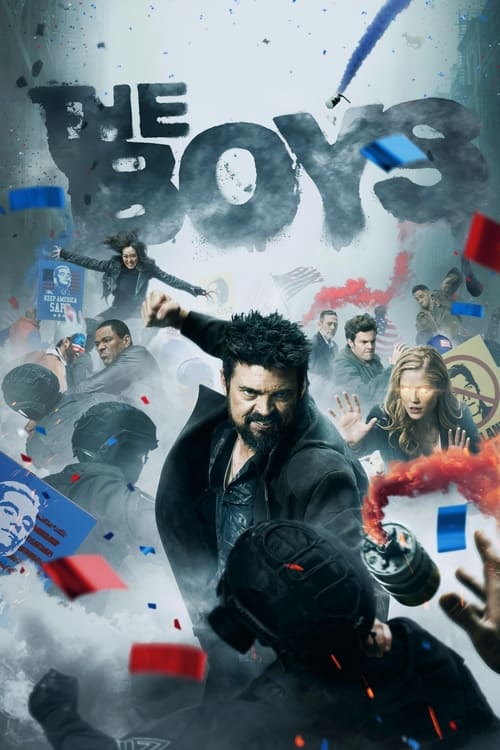
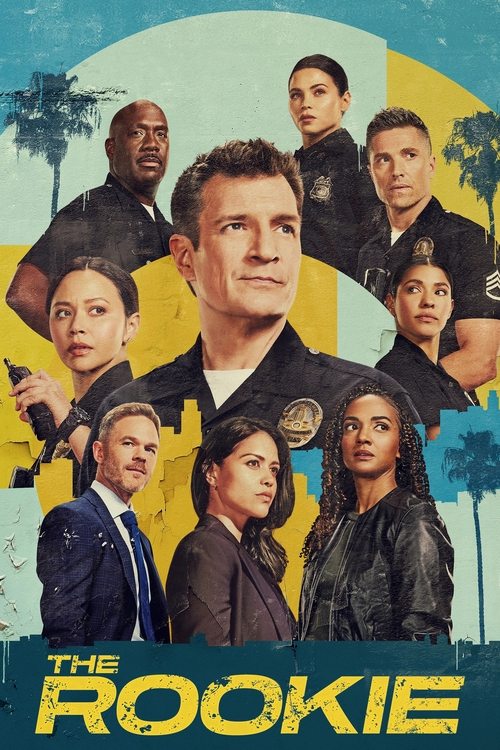
The Boys finished its fifth season on 20 May 2026: eight episodes, 42 days. The Rookie's fourth season opened on 26 September 2021 and closed on 15 May 2022: 22 episodes across 231 days.
Both sit in EpisodePing's 30 most-tracked shows this week. The Boys has three trackers, The Rookie four. Both are listed as returning series. The distance between them is not popularity. It is the shape of a season.
A season is a scheduling decision wearing the word "season". In this month's top 30 it can mean five weeks of Prime Video or seven months of ABC, five episodes or 22. Every figure below comes from the episode rows in the catalogue, which record what aired and when, so the numbers describe delivered television rather than announced plans. This week the longest-running show in this group also closes its 29th season with its sixth episode.
The status field does not help much here: nearly all 30 rows are marked Returning Series, two are in production and at least one has already ended, and the twelve shows at the bottom all sit on three trackers, so those names can rotate between refreshes while every count stays the same. None of it tells you whether the next season is six episodes in ten weeks or 22 episodes over seven months.
Eight episodes, then a long silence
The Boys has aired 40 episodes in five seasons, eight in each. All eight of the first carry 25 July 2019 as their air date. The second, third and fourth seasons each ran 35 days. The fifth took 42.
The waits are the other half of the pattern: 406 days between the first and second seasons, 602 before the third, 707 before the fourth, 629 before the fifth.
Five weeks on, up to two years off. For a show with this release shape, the season is the short part.
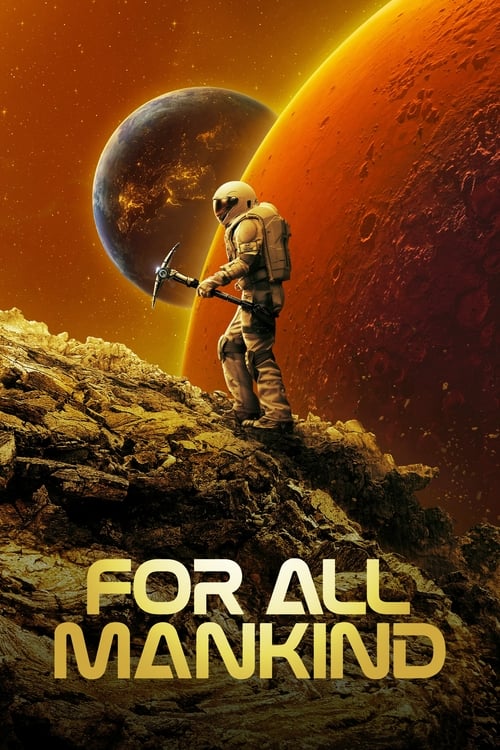
For All Mankind does the same at ten episodes a season. Five seasons, 50 episodes, every run between 49 and 63 days, and gaps of 427, 412, 455 and 805 days between them.
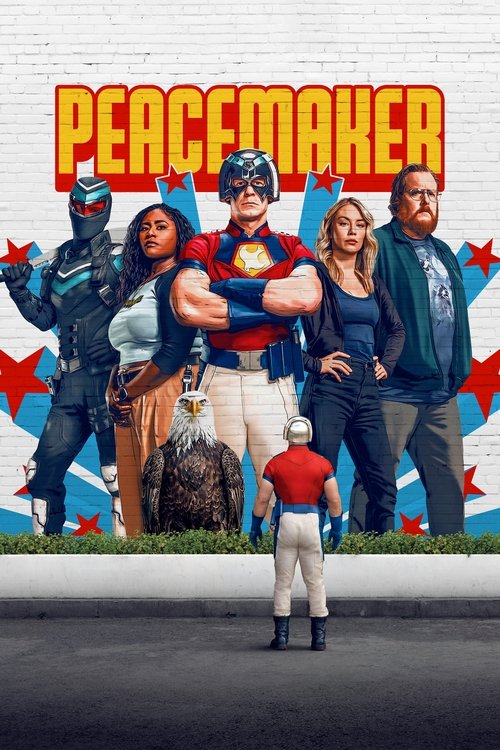
Peacemaker has done it twice: eight episodes in 35 days in 2022, eight in 49 days in 2025, 16 episodes in total.
Even Landman, the most-tracked show on the site at eight trackers, has arrived as two ten-episode blocks, 56 days for the first and 63 for the second, 20 episodes altogether.
Put the tracker counts next to those numbers and the list stops looking like a ranking of demand. The Boys has three trackers and 40 episodes. The Rookie has four trackers and 144. Landman leads the site on eight trackers with 20 episodes behind it. What people track is a show they intend to keep up with, and keeping up with a five-week season is a different promise from keeping up with a seven-month one.
The broadcast season is still a season
The Rookie is the other model, and the only show here that behaves the way network television always did. Eight seasons have aired, 144 episodes, in runs of 20, 20, 14, 22, 22, 10, 18 and 18. Those seasons took 182, 224, 133, 231, 219, 91, 126 and 118 days.
It opens in autumn, January or February and finishes in April or May, then disappears for the summer. Episodes arrive a week apart instead of in one upload, which is why a Rookie season can generate 22 alerts and a Boys season eight.
Two of those seasons are short: 14 episodes in 2021 and 10 in 2024. Even the broadcast model has dropped below 20 episodes, twice in nine years. But the weekly rhythm survives, and that rhythm is what makes a broadcast show feel like a habit rather than an event.
Bridgerton's season is a weekend
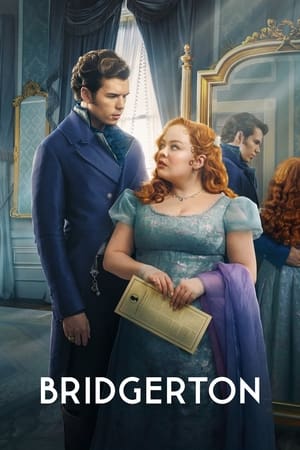
Bridgerton has aired 32 episodes in four seasons, eight per season. Every episode of the first carries 25 December 2020 as its air date; every episode of the second carries 25 March 2022. The third and fourth spread their eight episodes across 28 days each. A fifth season already has two rows in the catalogue, neither with a date attached.
The waits between seasons were 455 days, 783 days and 595 days. A viewer tracking Bridgerton waits about two years for a weekend of television, then starts waiting again.
South Park went the other way
South Park is the oldest show in this group and the only one whose seasons shrank to a third of what they once were. It has 29 seasons and 337 episodes since 13 August 1997. It is also the only animation in this week's top 30 and the only show in that list with 29 seasons.
Season 2 ran 18 episodes over 294 days, from 1 April 1998 to 20 January 1999. Seasons 17 to 23 ran ten episodes each and finished inside 77 to 84 days. Season 24 has two episodes, 161 days apart. Seasons 25 and 26 ran six episodes in 42 and 49 days; seasons 27 and 28 ran five each, over 63 and 56 days. Season 29 started on 16 September, runs six episodes over 70 days, and ends on 25 November.
Split the run in two and the change is plain: 237 episodes across the first 16 seasons, 100 across the last 13.
The calendar is just as uneven. There were 847 days between seasons 26 and 27, the longest break in the show's history. No season began in 2024. 2025 is the only year in which two South Park seasons started, one in July and one in October: five episodes each, ten for the year.
The finale is still listed in the catalogue as "Episode 6", with no title of its own. Whatever it ends up being called, it is the sixth episode of a season that took ten weeks from first to last.
What a track actually gets you
Strip the branding and each of these shows is a calendar with a different number of entries.
The Rookie gives you about 20 alerts spread over seven months, then nothing until next year. The Boys gives you eight alerts in five weeks and then up to 707 days of quiet. Bridgerton gives you one weekend. South Park gives you six alerts in ten weeks and then a break of unpredictable length; the show has gone 847 days between seasons.
That is the part a season count hides. "29 seasons" sounds like a library. It is really a set of short windows with gaps between them, and some of those gaps ran past two years.
It changes what catching up costs, too. The whole of South Park's 29th season is six episodes, one evening. Catching up on The Rookie from the start is 144 episodes. Catching up on The Boys is 40 episodes spread across seven years of release. The same top 30, three very different commitments.
The practical version: a weekly habit from autumn to spring means a broadcast show. One intense month and a long wait means a streaming drama. Something you can finish in a night means a six-episode season, which is now normal for a show that used to run 18, and South Park's closes on Wednesday.
Tracking is less about how much television exists than about the date the next episode lands. That date is the whole product.